THE FIRST DECADE, 2016 – 2026
Ten years of visibility, dialogue and global impact
When the Amsterdam Rainbow Dress was unveiled in 2016, it was created as an artistic response to a painful reality. Made from the national flags of countries where LGBTQIA+ identities were criminalised, the Dress transformed symbols of exclusion into a powerful expression of visibility, dignity and hope. What began as a single artwork in Amsterdam soon grew into an international movement that uses art to foster dialogue about equality, human rights and freedom.
Over the course of its first decade, the Amsterdam Rainbow Dress travelled across Europe, North and South America, Asia, Africa and Australia. It appeared in museums, embassies, theatres, universities, public squares and Pride celebrations. It was presented in moments of joy and celebration, but also in places where visibility remains politically sensitive and where simply being yourself can still come at a high cost.
Wherever the Dress travelled, it created encounters. It brought together activists and diplomats, artists and politicians, students and community leaders. It opened conversations that transcend borders, languages and cultures. The Dress does not speak with anger. Instead, it invites people to look, to reflect and to engage in dialogue about the universal values of equality, freedom and human dignity.
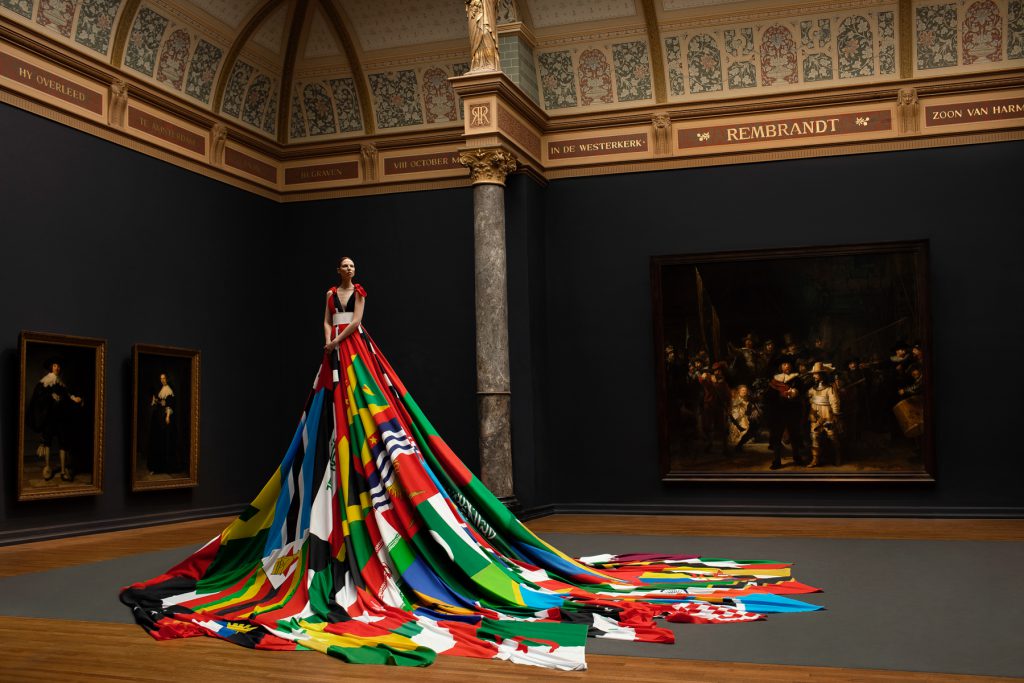
AMSTERDAM 2016 Photo: Pieter Henket / Amsterdam Rainbow Dress
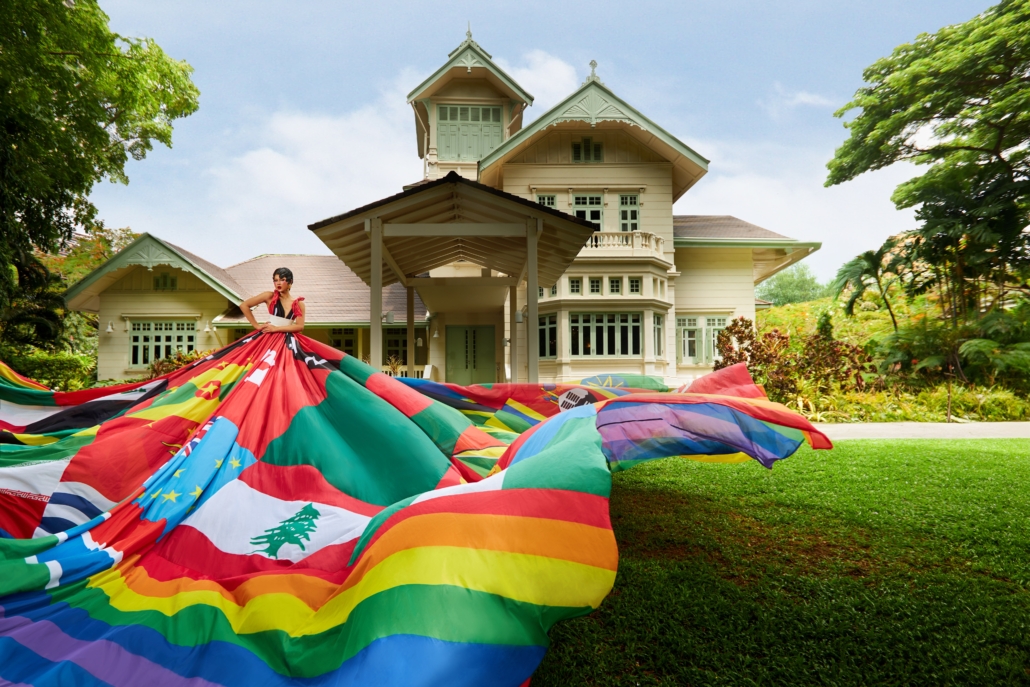
BANGKOK 2026 Photo: James Pisuto / Amsterdam Rainbow Dress Foundation
A global journey
The Amsterdam Rainbow Dress has been photographed and presented in more than thirty-five countries around the world. Each location added a new chapter to its story. The Dress stood in historic city centres, at sites of political significance, in cultural institutions and alongside local LGBTQIA+ communities whose stories deserve to be seen and heard.
These journeys have shown that the struggle for equality is never abstract. Behind every flag represented in the Dress are real people, real lives and real experiences. By bringing these stories into the public eye, the Dress creates space for empathy and understanding, while reminding audiences that human rights can never be taken for granted.
A living photographic archive
One of the most distinctive aspects of the project is its international photography archive. In every country, the Dress is photographed in collaboration with local photographers, artists, activists and members of the community. These photographs are more than documentation. They are portraits of courage, resilience, joy and resistance.
Together, these images form a unique visual archive that spans continents and cultures. They capture not only the Dress itself, but also the social and political realities surrounding LGBTQIA+ lives across the globe. Every image becomes part of a larger story, one that continues to grow with every new destination.
Art, diplomacy and education
Throughout its first decade, the Amsterdam Rainbow Dress has built partnerships with diplomatic missions, governments, museums, universities and cultural institutions worldwide. This unique intersection of art, diplomacy and education has enabled the project to engage with complex issues such as equality, legislation and human rights in an accessible and deeply human way.
The Dress has demonstrated that art can open doors where traditional advocacy sometimes cannot. It creates moments of connection, encourages dialogue and offers a space in which difficult conversations can take place with openness and respect.
Looking ahead
Ten years after its creation, the Amsterdam Rainbow Dress has become far more than an artwork. It is a globally recognised symbol of visibility and solidarity. It is a meeting place for stories from around the world. And it is a reminder that art can inspire change, challenge injustice and create hope.
The first decade established the global presence of the Amsterdam Rainbow Dress.
The next decade begins with a new question.
How can the stories hidden within the Dress not only be seen, but also be heard?
The answer is Unfolded Voices.